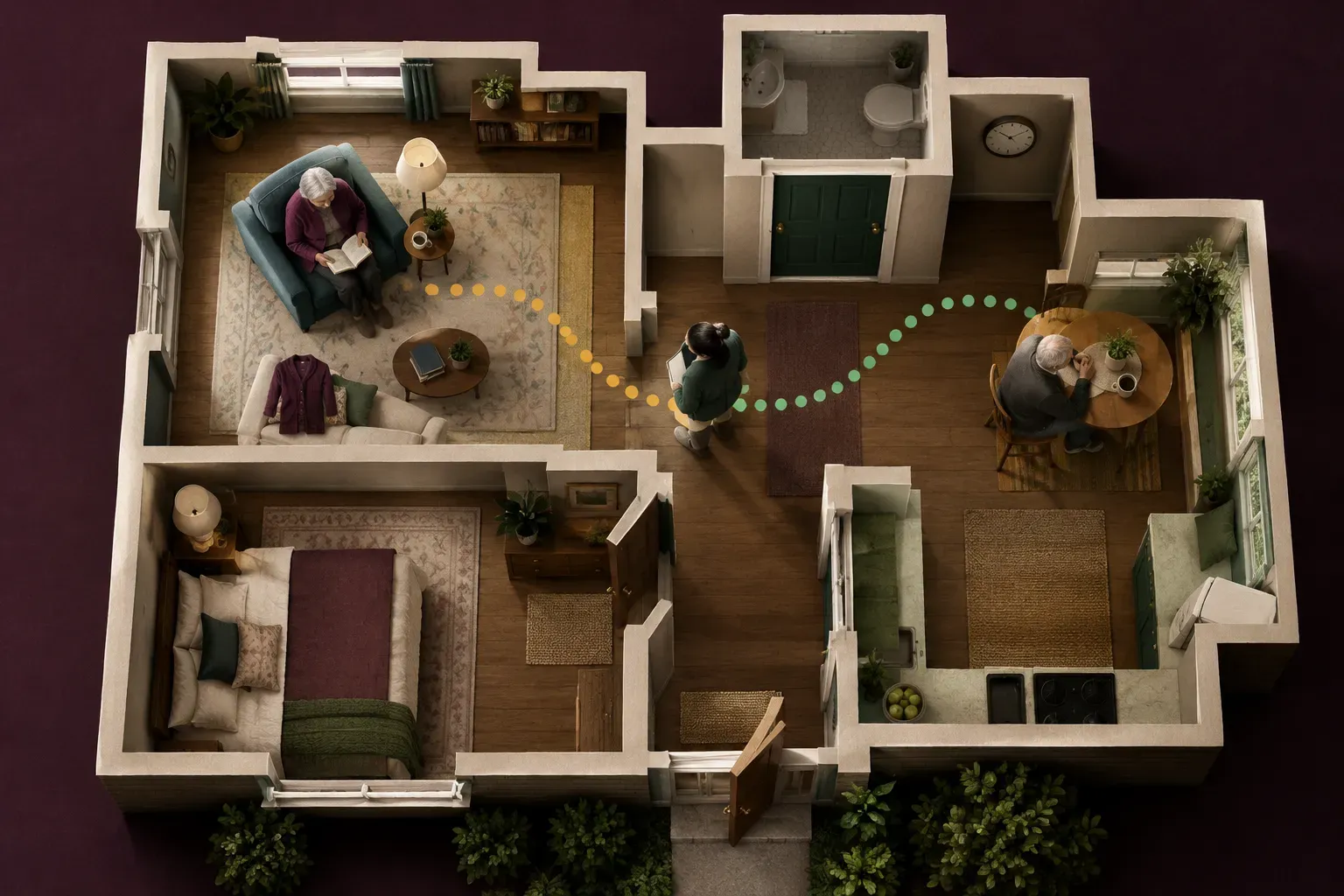
You’re ready to put a break on the calendar. Then you picture lunchtime: one parent needs help eating, the other needs help getting to the bathroom, and the caregiver can’t be in both places.
One respite caregiver may be able to support both parents—but only when their individual needs fit together during the actual visit and the provider agrees to the arrangement after assessing both adults. Sharing a home doesn’t make this an automatic two-for-one service.
For adult children and spouses across Washington State, the useful question isn’t simply whether a caregiver will support a couple. It’s whether the proposed schedule replaces the help you normally provide, without leaving either person waiting for assistance that can’t wait.
Start with two people, not one household
Washington’s home-care planning rule generally requires an individual written plan for each client, developed with input and written approval from the client, designated family member, or legal representative. Planning is based on an on-site visit and identifies specific non-medical services and their frequency. The rule includes exceptions; it isn’t a universal description of every respite arrangement.
That individual focus matters. A shared lunch may involve one meal-preparation task, but eating assistance, dressing, toileting, and personal preferences belong to each person’s plan. The planning requirement itself doesn’t establish that one caregiver is suitable for every two-parent household.
If you’re the spouse who usually helps, include your own support needs too. A visit isn’t much of a break if you’re still expected to handle every interruption or help your partner while receiving assistance yourself.
Map the hours you actually want covered
Build a side-by-side picture of the proposed visit—not an idealized version of the whole day. Include an ordinary day and the predictable variations: a slower morning, a longer bathroom routine, or a meal that takes more assistance.
Use a worksheet with these columns:
- Time or approximate window
- Parent A’s task and Parent B’s task
- Hands-on help, standby help, or companionship
- Approximate duration
- Whether the task can comfortably wait
- Privacy preferences
- Agreed backup if needs overlap
Include meal preparation, eating assistance, toileting, bathing, dressing, walking, companionship, and household tasks. Record what each parent can do without direct help while the caregiver is occupied elsewhere.
This is a family planning tool, not a state-required form. Its purpose is to make the requested services and timing visible before a provider decides whether one caregiver can carry them out.
Be specific. “Lunch support” might mean setting out plates for one parent and staying beside the other throughout the meal. Those are different demands, even at the same table.
Look for the moments that collide
Consider two hypothetical afternoons. In the first, both parents enjoy the same lunch, eat without assistance, and want company afterward. Shared preparation and companionship may fit together well.
In the second, one parent needs hands-on eating assistance while the other needs immediate toileting help. Moving laundry to later won’t solve that conflict. The competing needs involve direct attention, not a chore that can wait.
Mark each overlap and ask: Who can comfortably remain without direct help, and for how long? Ask the provider to evaluate that question rather than deciding from the task list alone.
Separate flexible work—folding towels, washing dishes, preparing tomorrow’s vegetables—from assistance you and the provider identify as unable to wait. Don’t quietly assign the other parent as backup. If one spouse usually interrupts lunch to help the other, the respite arrangement must replace that work too.
Ask each parent what sharing help would feel like
A practical schedule still needs both parents’ participation. One may welcome a shared routine; the other may want personal-care help privately or prefer to discuss concerns without their spouse present.
Ask each person separately, if they prefer:
- Are you comfortable receiving personal-care help while your spouse is nearby?
- Would you agree to moving a flexible routine earlier or later?
- Do you want private time to speak with the caregiver?
- Who may receive updates about your support?
Washington’s home-care bill of rights addresses participation in planning, refusal of specific services, appropriately trained personnel, and privacy and confidentiality. Marriage or a shared address shouldn’t be treated as blanket permission to share personal information.
Write down the agreed preferences. A caregiver-update privacy plan can help clarify who receives which information without turning every update into a household announcement.
Get a concrete answer from the provider
“Do you care for couples?” is a starting question, not a complete assessment. Bring the routine map and ask:
- Will you assess and accept both parents as clients?
- Can the assigned caregiver carry out both plans during this schedule?
- What happens if both need hands-on help at once?
- Which requested tasks fall outside the caregiver’s training or your agreed scope?
- How will each parent’s services and preferences be documented?
- Who supervises the arrangement, and how do we contact that person?
- What changes would trigger reassessment?
- What is the backup if the caregiver cannot attend?
Request a written quote that explicitly accounts for two adults needing support. Don’t assume a shared rate or discount, and ask what would change if additional staffing became necessary.
Change the timing—or add another helper
The right arrangement depends on the conflict you’re trying to resolve.
Staggered routines may work when timing is genuinely flexible and both parents agree. One person might prefer dressing help before breakfast while the other is comfortable reading independently. Staggering shouldn’t mean repeatedly postponing necessary assistance or overriding someone’s preferences.
Overlapping caregiver visits may be more workable when separate attention is predictably needed during a busy period, such as morning personal care or mealtime. Ask the provider how responsibilities and handoffs would be divided.
A second assessed helper may be needed when simultaneous needs can’t reliably be separated. Distinguish two parents each needing attention from one parent whose particular assistance requires more than one trained worker. Those are different staffing questions. An available relative isn’t a substitute for required skills or equipment.
The goal isn’t to squeeze every task into one person’s visit. It’s to choose a schedule that can actually deliver the agreed support.
Try the busiest period before relying on it
Consider a supervised trial during the most demanding part of the intended break. This is a planning recommendation, not a regulatory requirement. Stay available for the initial handoff without becoming the arrangement’s permanent, unspoken backup.
Afterward, review what happened: Did necessary tasks get delayed? Was personal care interrupted? Did either parent feel rushed or exposed? Did the family caregiver actually step away from responsibility?
If the plan worked only because you repeatedly stepped in, revise it before leaving for a longer break. Washington’s home-care planning rule calls for updates when significant changes in care needs are identified; a workable arrangement needs to keep pace with those changes.
Proceed with one caregiver only after the provider has accepted both parents’ needs, resolved foreseeable overlaps, and agreed on backup. Otherwise, adjust timing or staffing first.
Across Washington, DSHS directs caregivers to their local Family Caregiver Support Program for practical information and connections to respite resources.
For families in King and Snohomish counties, you can discuss both parents’ non-medical support needs with Veya. Bring the routine map and the hours you hope to step away. Start dates depend on finding an appropriate caregiver whose skills and availability fit the requested schedule.
Care starts at $45 per hour with a 20-hour weekly minimum. Your rate and service terms are confirmed before care begins.
This guide is general information about non-medical support at home. For diagnosis, treatment, medication, or other medical decisions, speak with a qualified healthcare professional.