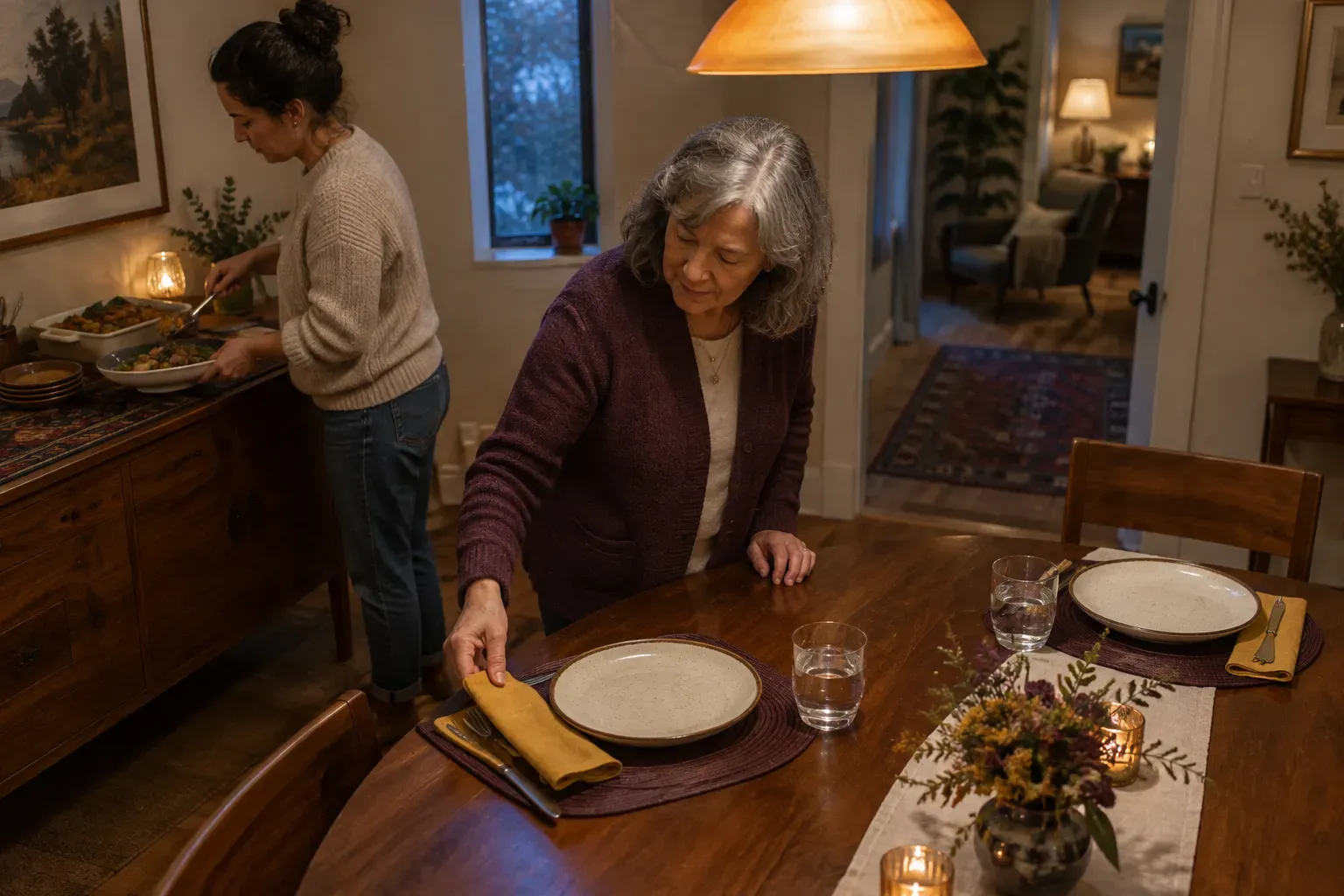
The refrigerator is full of neatly stacked containers, but dinner still hasn’t happened. Before you order another week of meals, ask a different question: If a favorite prepared dinner were already in the refrigerator, would your parent comfortably turn it into a meal they want to eat?
For a spouse, the question may be more immediate: Which parts of dinner are you quietly doing every evening, and which would you both like help with?
Neither question explains why a meal was missed. They’re conversation starters. Across Washington State, choosing useful meal support starts with separating food preparation from everything that happens afterward—and asking the older adult what they want to keep doing.
Follow the meal from shopping list to clean plate
“Help with meals” can mean choosing dishes, buying groceries, cooking, opening containers, reheating, carrying a plate, setting out utensils and a drink, sharing dinner, or washing up. One arrangement may cover only a few of those steps.
Start with what your parent or spouse says feels inconvenient or unwelcome. Perhaps they enjoy cooking but dislike shopping. Perhaps they’re happy to reheat soup but would like someone to carry it to the table. Or perhaps they want dinner company, not another casserole.
Washington’s Department of Health lists meal preparation and ordinary housework among examples of non-medical home-care services. For planning purposes, distinguish kitchen tasks from support centered on the person: cleaning a counter is different from helping someone get their preferred dinner served and settled. That’s a practical distinction, not a rigid boundary. Our explanation of non-medical home care versus housekeeping explores that choice further.
Compare what each option actually covers
Batch cooking, prepared-meal delivery, and caregiver visits can work separately or together. The useful comparison is not simply “Which provides food?” It’s “Who handles each remaining step?”
| Option | Tasks to arrange | What to verify | What remains uncovered |
|---|---|---|---|
| Batch cooking | Preferred dishes, portions, containers, storage, and usable reheating directions | Can the person comfortably open, reheat, and serve what’s prepared? | Daily serving, company, and cleanup unless someone takes responsibility |
| Prepared-meal delivery | Menu selection, ordering, receipt, and a place for meals | Do meals arrive ready to eat, chilled, or frozen? Check packaging, delivery days, and food preferences. | Reheating, table setup, company, and dishes unless explicitly included |
| Caregiver visits | Agreed help with reheating, serving, table setup, companionship, and cleanup | Confirm the exact tasks, timing, and any requested eating assistance | Shopping, cooking between visits, or other meals unless arranged |
Don’t assume meal delivery includes a sit-down visit, or that every caregiver arrangement includes every task. Washington’s senior nutrition materials describe different meal-service formats, including delivery and pickup or carry-out arrangements. Ask what a particular service actually provides.
A combination may be the simplest answer: prepared food handles the cooking, while an invited helper handles serving and dishes. But there’s no reason to add visits if preparation alone meets the person’s wishes.
Spend one week noticing—with permission
Before committing to an arrangement, ask whether your parent or spouse would be comfortable looking at the dinner routine together for a week. Explain the purpose: to find the least intrusive help they actually want, not to grade their independence.
Use the meals that matter most. Keep brief notes with permission, and record concrete events rather than labels such as “not coping.” This is a planning exercise, not a validated assessment or a way to infer a diagnosis.
For each meal, consider:
- Was a preferred meal available?
- Could the person open, heat, and bring it to the table as they wished?
- Were utensils and a drink accessible?
- Did they want company or privacy?
- Which tasks did a spouse or adult child take over?
- Were the dishes manageable afterward?
- What did the older adult say would make the next meal easier?
Days one and two: Notice the usual routine without removing existing help. Ask what feels comfortable and what feels like a chore.
Days three and four: Try one agreed practical change, such as easier packaging or setting out the utensils beforehand. Avoid changing everything at once.
Days five and six: If welcomed, try a shared dinner while keeping the food reasonably comparable. The invitation matters; someone may prefer quiet at dinner and company at another time.
Day seven: Review together. What felt easier? What felt intrusive? What would they like to repeat?
Don’t pressure the person to eat, withdraw support to test independence, or treat a difference between evenings as proof of what caused it.
Choose the smallest change that addresses the gap
If your parent independently enjoys prepared food, try preparation or delivery support first. If meals are available but opening, reheating, or serving remains unfinished, test help with those specific tasks rather than ordering more food.
If they ask for company, arrange company. That might mean an invited family dinner, a shared-meal opportunity nearby, or an agreed companionship visit. Don’t promise that company will change appetite; the immediate goal is the experience the person wants.
Where needs overlap, combine options. Keep chosen roles intact: your spouse might select the menu, your parent might make a favorite side, or either might prefer setting the table while someone else handles hot dishes.
Also count the work already falling to family. A plan that appears independent may depend on a spouse doing all the serving and cleanup. Ask which tasks that spouse wants to retain and which they’d welcome handing over.
A Washington starting point for local options
Washington DSHS directs residents to Community Living Connections at 1-855-567-0252 for information about services and supports in their area. It’s a statewide starting point, not a promise that the same meal programs operate everywhere.
Ask:
- Who offers prepared-meal delivery or shared meals near this address?
- How are meals provided—ready to eat, chilled, frozen, or picked up?
- Are transportation options available for shared meals?
- Who can confirm current schedules and arrangements?
DSHS identifies home-delivered meals among care options, and its nutrition materials describe group meals. Treat these as leads to investigate, not guaranteed local availability.
Build the plan around dinner, not just a delivery
Write down the preferred mealtime, when a helper should arrive, which tasks remain the older adult’s, whether conversation is welcome, and what cleanup includes. Choose a backup for a missed delivery or unavailable helper. Review the arrangement together after a week.
For families in King and Snohomish counties, Veya offers non-medical support including meal preparation, companionship, eating assistance, and light household support. Veya does not serve all of Washington State. A brief dinner-only need may not fit its weekly service minimum; review current pricing and scheduling requirements before building a plan around visits.
If the older adult also wants other support, you can discuss the preferred routine with Veya. Start dates depend on finding an appropriate caregiver whose skills and availability fit the requested schedule.
The aim isn’t to take over dinner. It’s to make the chosen meal easier to prepare, serve, enjoy, and finish—while leaving the person in charge of the parts they value.
Care starts at $45 per hour with a 20-hour weekly minimum. Your rate and service terms are confirmed before care begins.
This guide is general information about non-medical support at home. For diagnosis, treatment, medication, or other medical decisions, speak with a qualified healthcare professional.