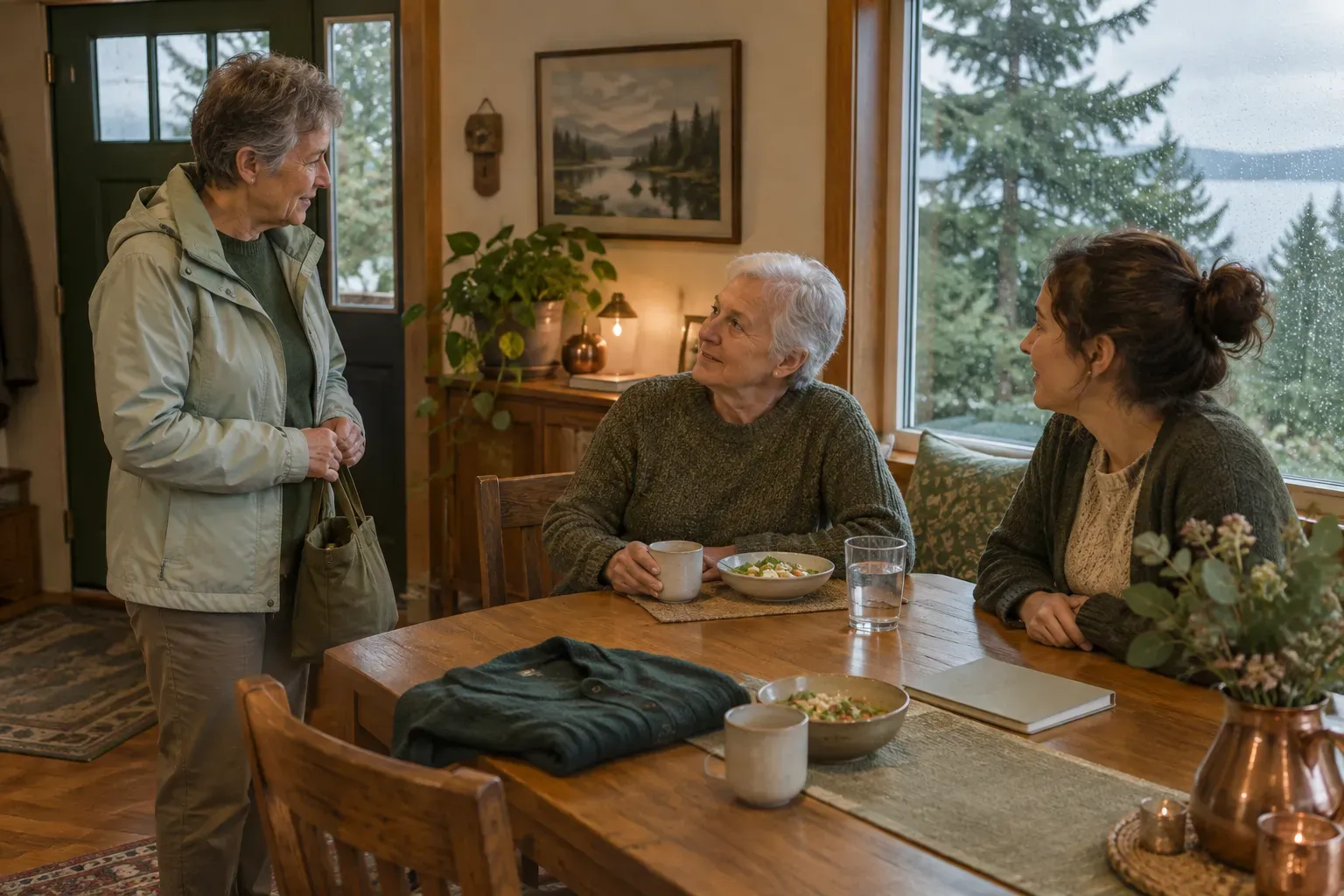
AI-generated editorial image; people depicted are not Veya clients.
“I need a break, but I cannot simply walk out.”
If that describes your days with an older partner, advice to “take some time for yourself” may feel incomplete. Before you can meet a friend or enjoy a quiet walk, someone needs to understand what your partner wants and what assistance they need while you are away.
Respite means arranging temporary support so you can take time away from caregiving. Seattle–King County Aging and Disability Services describes in-home help as one way to arrange that support. It does not require assuming why your partner needs company or assistance. The starting point is your household’s actual routine.
A workable daytime break has three parts: time you want to use, support your partner agrees to and needs, and a clear handoff. You do not have to solve every future care question before beginning that conversation.
Start with a break worth protecting
Instead of beginning with an empty calendar slot, ask yourself: What would I genuinely like to do with time away?
It might be a weekly walk, lunch without watching the clock, or a regular visit with a friend. A personal appointment also counts. Your break does not have to be impressive or productive to matter.
Family Caregiver Alliance recommends using respite early and regularly, choosing something meaningful for the time away, and allowing for trial and error. A recurring plan gives you something concrete to discuss rather than leaving each outing dependent on a last-minute arrangement.
Write down your preferred day, what you want to do, and how flexible the timing is. If an adult child is helping, give them a bounded task—such as gathering provider questions or organizing the handoff sheet—rather than asking them to figure out the whole arrangement.
Keep your own purpose visible. If every planned break becomes a list of household errands, consider whether the next one could include something that feels restorative to you.
Choose the visit length by working backward
The length of the outing is not necessarily the length of the caregiver’s visit. You also need time to welcome the caregiver, share any changes, travel, and return without an unnecessarily tight deadline.
Use this planning worksheet:
Arrival and handoff time + time away, including travel + a return buffer = requested visit length.
Begin with the outing you want, then compare that window with your partner’s usual day:
- Will the visit include lunch or another meal?
- Is personal-care assistance likely to be needed during that time?
- What activities would your partner enjoy?
- Is walking or transfer assistance part of the proposed support?
- What needs to happen before you leave and after you return?
These questions help define the work, not just the hours. A visit that includes preparing lunch and agreed personal-care assistance needs to be planned differently from one focused on conversation and a shared activity.
Include a realistic travel allowance for your Seattle outing. Do not make an on-time return depend on everything going perfectly. Ask the provider to confirm whether the requested visit length, tasks, and recurring schedule are workable; no worksheet alone establishes a suitable arrangement.
Explain the arrangement honestly and respectfully
Your partner may welcome help, dislike the idea, or feel uncertain about having someone new at home. Family Caregiver Alliance acknowledges that a person receiving care may resist assistance and recommends gently but firmly expressing the caregiver’s need for time away.
You might say:
“I need a regular break. We’re arranging a caregiver to spend time with you and help with lunch while I’m out. Let’s talk about what would make that comfortable.”
Identify the person honestly as a caregiver. Describe the help being considered rather than disguising the visit as something else.
Invite preferences that can shape the visit: how your partner likes to be addressed, what they would enjoy doing, when they prefer lunch, or how they want assistance offered. You can acknowledge discomfort without withdrawing your own need: “I understand that this feels unfamiliar. Having regular time away matters to me, and I want us to plan it thoughtfully.”
Consider asking about an introductory visit with you present. Treat that as an opportunity to learn, not a promise that everyone will feel comfortable immediately.
Prepare a one-page handoff
A handoff should help the caregiver understand this visit, not become another large project for you. Start with one readable page and review it together. Written notes do not replace the provider’s assessment or agreement about tasks.
Include:
- Preferred name and communication: How your partner likes to be addressed and what helps conversations go well.
- Usual routine and enjoyable activities: Meal timing, preferred quiet time, and activities they want to do.
- Food preferences and allergies: What is planned for the visit and where food is kept.
- Agreed personal-care help: The assistance the provider has confirmed for this visit.
- Walking or transfer assistance: Only support already assessed and accepted by the provider, including relevant equipment.
- Supplies: Where the caregiver can find items needed for the agreed tasks.
- Your contact details and expected return: How to reach you while you are out.
- Backup contact: Who to contact if you cannot be reached.
- Emergency procedure: Confirm the procedure with the provider before leaving.
- Return notes: What you want recorded, such as meals, activities, assistance provided, and questions to discuss.
Keep the page focused on useful details. If something important cannot be explained clearly, raise it with the provider before the outing rather than leaving the caregiver to interpret an unclear instruction.
Confirm the plan, then review the first outing
Before leaving, ask the provider:
- Can the caregiver perform all the agreed tasks?
- Is the requested recurring schedule workable?
- What happens if the caregiver cannot attend?
- What should I do if I expect to return late?
- How will changes or concerns be communicated?
These are planning questions, not guarantees of uninterrupted coverage. Make sure you understand the answers and any limits before relying on the arrangement.
After the first outing, ask your partner and the caregiver what worked and what felt awkward. Review your own experience, too: Was there enough handoff time? Did travel make the visit feel rushed? Did you use the break as you hoped? Adjustments are part of finding a workable rhythm, not evidence that the idea has failed.
A Seattle resource—and an honest look at service fit
For independent local guidance, Community Living Connections at 1-844-348-5464 offers free, confidential calls and consultations about caregiver support and local resources. Seattle–King County Aging and Disability Services identifies respite among the options caregiver advocates can discuss. This is a community resource, not a Veya affiliate. Free consultation does not mean that all respite services are free; services may have charges or limits.
Veya serves King and Snohomish counties. Our in-home support in Seattle can include companionship, meal preparation, and agreed personal-care assistance. Walking and transfer support depends on caregiver training, your partner’s needs, and equipment.
Veya has a weekly service minimum, so a single short weekly visit should not be assumed to meet it. Review current rates and weekly service requirements when considering fit. Start dates depend on finding an appropriate caregiver whose skills and availability match the requested schedule.
You do not need a perfect plan to begin. Talk with Veya about your desired break, the assistance your partner needs, and the recurring daytime schedule you have in mind.
Care starts at $45 per hour with a 20-hour weekly minimum. Your rate and service terms are confirmed before care begins.
This guide is general information about non-medical support at home. For diagnosis, treatment, medication, or other medical decisions, speak with a qualified healthcare professional.
Looking for support nearby? Explore caregiver placement in Seattle.