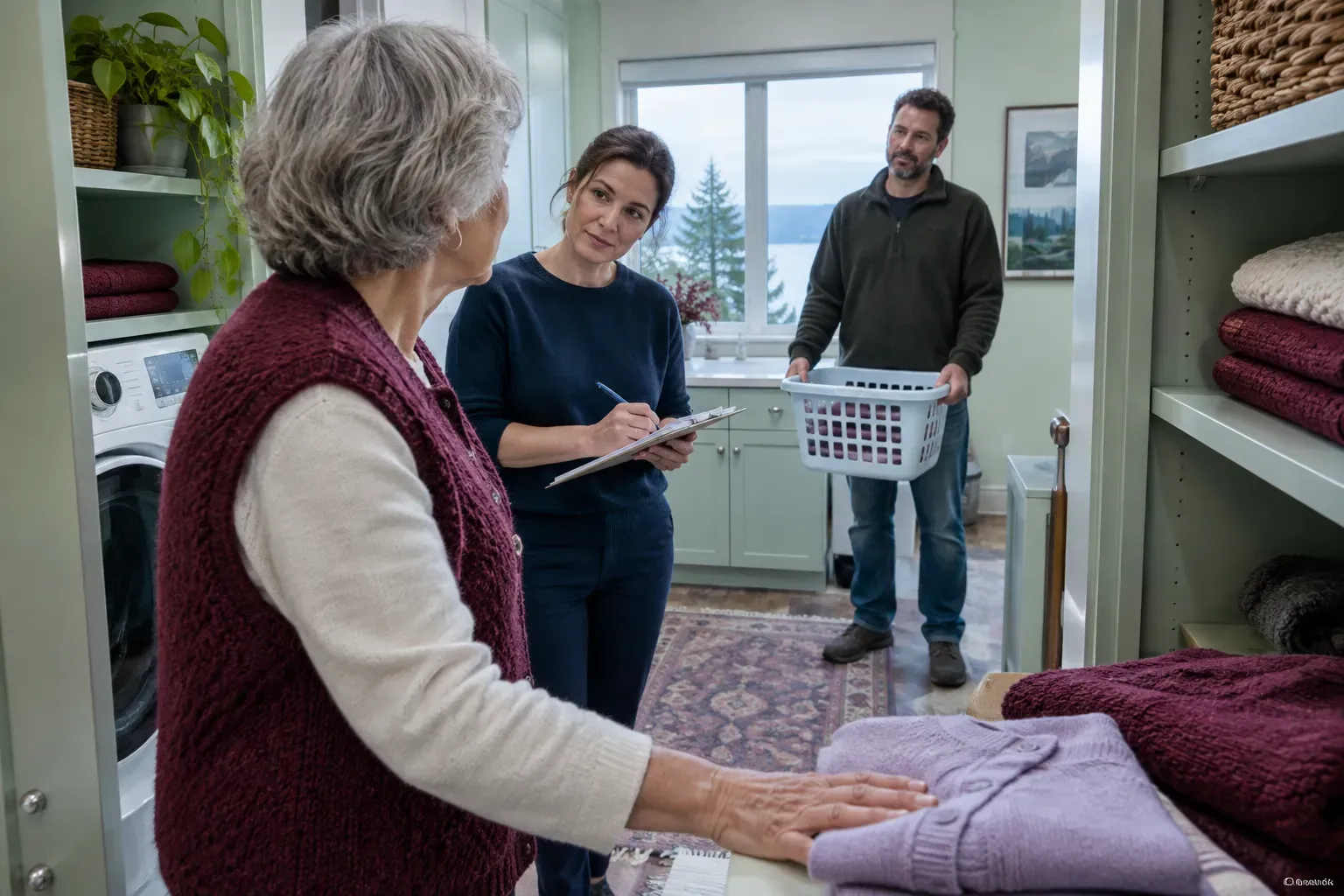
Before You Book Home Care in Auburn: What Should an In-Home Assessment Deliver?
You’ve explained that your dad needs help getting ready in the morning. The agency says it can help. But does that mean setting out clothes, assisting with bathing and dressing, making breakfast—or all three? And will the proposed visit cover the routine he actually wants to keep?
An in-home assessment should turn a broad request into an understandable proposal for everyday support. You should know what the caregiver would do, what your parent or spouse wants to do independently, when visits would happen, and what remains unconfirmed.
For families in Auburn, Washington, there’s another early question: can the agency serve the exact address? Auburn spans King and Pierce counties, so a city name alone isn’t enough to establish coverage.
Before arranging a visit, ask whether you’re booking an introductory consultation, an assessment, or both. Then use the appointment to work toward a written plan—not simply a recommendation to begin services.
First, make sure you’re booking the right appointment
An introductory consultation can help you learn about an agency and explain what your family is looking for. An assessment should move into the details needed to propose support. The service agreement is a separate document to review before accepting ongoing arrangements.
Those stages may overlap, but don’t assume they do. Visiting Angels’ Puyallup-hosted assessment guidance, for example, describes an assessment that typically follows a no-cost, no-obligation consultation, although both can happen during one visit. That describes its process, not a promise about every agency.
Ask a direct question before setting aside an afternoon:
“Will this appointment produce a proposed care plan, or is it an introductory discussion? If the assessment comes later, what happens between the two?”
A first conversation doesn’t need to produce a finished plan immediately. It should leave you knowing which step you’ve completed, what information is still needed, and when you’ll receive something to review.
Auburn Senior Resources and an agency assessment do different jobs
If you’re still figuring out where to look for help, Auburn Senior Resources offers appointment-based resource navigation, including connections to home care. Its published appointment number is 253-470-2098.
That service has a different purpose from an agency assessing the support it proposes to deliver. Resource navigation can help you find services to investigate. An agency assessment should clarify whether that particular provider can meet your household’s needs and what its proposed arrangement would include.
You might use both: first to identify possible resources, then to examine a provider’s proposed plan. A connection through the city should not be treated as the city’s endorsement of an agency or approval of its services.
Let your parent or spouse describe the day first
Consider including the person receiving support, a family member who knows the daily routine, and anyone who needs to approve the arrangements. That’s a practical starting point, not a mandatory guest list. A crowded room can make it harder for your parent or spouse to be heard.
Start with an ordinary day rather than a list of difficulties. Invite them to describe when they get up, how they like to dress, what they eat, and which activities they want to continue. Ask where help would be welcome—and where they would prefer someone to step back.
Small preferences can change the proposal. Your mother might want help washing and folding laundry but prefer to put it away herself. Your spouse might welcome breakfast preparation but dislike conversation before the first cup of coffee.
Family members can fill in gaps without taking over. If you disagree about a task, ask the assessor to record the difference instead of smoothing it into a vague statement that everyone wants “morning help.” The plan should reflect the person’s preferences alongside the practical support being considered.
Ask for a task-by-task plan, not a broad label
For ongoing home care, Washington’s home-care planning rule calls for a written plan based on an on-site visit, with input and written approval from the client, designated family member, or legal representative. It also calls for specific nonmedical services and their frequency.
That gives you a useful baseline: ask what will be done and how often. The additional fields below are practical recommendations for making the proposal easier to understand—not a claim that every field is required.
| What to document | What a useful entry answers |
|---|---|
| Everyday task | Is this breakfast preparation, dressing assistance, laundry, companionship, transportation, or another specific activity? |
| Independent role | What does your parent or spouse want to keep doing themselves? |
| Caregiver’s assistance | Exactly which parts would the caregiver handle? |
| Preferences | What timing, food, clothing, privacy, or activity preferences should guide the visit? |
| Visit pattern | Which days, what time of day, and how frequently is this support proposed? |
| Open questions | What still needs review or confirmation, and who will follow up? |
Only include services relevant to your household. An assessment isn’t better because it produces a longer list.
Then read across the tasks and schedule together. If the priority is getting dressed before breakfast, does the proposed arrival time support that? If the visit includes companionship, what would your parent enjoy doing? “Spend time together” is less useful than a description of a preferred activity.
Put “not included or not yet confirmed” in writing
A plan becomes more useful when its limits are as visible as its promises. Request a separate section for declined tasks, work outside the agreed scope, responsibilities relatives will retain, and assistance that needs further review.
Consider “help prepare breakfast.” Does that include cooking, serving, eating assistance, washing dishes, and wiping the counter? Or only preparing the food? Either arrangement may suit a household, but they aren’t interchangeable.
The same clarity matters for mobility assistance. Ask the agency to confirm the proposed task against the person’s needs, caregiver training, and relevant equipment rather than accepting a general assurance that someone can help them move around.
For Veya, ambulation and transfer support is subject to caregiver training, client needs, and equipment. A requested task shouldn’t appear as confirmed while those details remain unresolved.
You can also name family responsibilities without turning them into caregiver duties: “Daughter handles grocery ordering; proposed caregiver role is meal preparation using food already in the home.” That distinction helps prevent assumptions on both sides.
Confirm the Auburn address before discussing a start
A nearby office or an Auburn service page doesn’t establish that an agency can serve every address in the city. Give the provider the full service address and confirm the county before arranging the assessment.
Ask:
“Can your agency serve this address, provide these tasks, and support this recurring schedule?”
Treat those as separate confirmations. Geographic coverage doesn’t establish that an appropriate caregiver is available for the requested work and timing.
Veya’s service area is King and Snohomish counties, so families should not assume coverage for an Auburn address in Pierce County. For an address within its service area, Veya’s start date still depends on finding an appropriate caregiver whose skills and availability fit the requested schedule.
Ask the assessor to distinguish what is confirmed from what is proposed. “The address is within our service area” and “we have confirmed your first visit” are different statements. The county boundary alone is not a reason to infer extra charges or staffing difficulties.
Before booking, settle the cost, commitment, and written next step
Ask separately whether the introductory consultation and the assessment have a charge. A provider’s offer of a free consultation doesn’t, by itself, answer whether a later assessment is free. Don’t assume either appointment is commitment-free unless the provider confirms it.
Before signing anything, ask what the signature authorizes: acknowledging a visit, approving a plan, accepting a service agreement, or something else. Request time to read the document if its purpose isn’t clear.
Before agreeing to ongoing visits, ask for the proposed written plan with the tasks, personal preferences, visit frequency, exclusions, unresolved items, and address-coverage confirmation. Establish when you’ll receive it, who should review and approve it, and which next step authorizes services to begin.
If you’re considering Veya’s non-medical support, explore home care in Auburn and confirm availability for your address. Bring your task list and preferred schedule to that discussion. The goal is a proposal you and your parent or spouse can read and recognize: this is the help being considered, these are its limits, and these are the questions still to resolve.
This guide is general information about non-medical support at home. For diagnosis, treatment, medication, or other medical decisions, speak with a qualified healthcare professional.
Looking for support nearby? Explore caregiver placement in Auburn.